
- Key takeaways
- What we are
- The real cost of a stack nobody designed
- The five layers of an outbound stack that actually holds together
- The dialer layer: how Aircall maximizes connect rate
- The AI coaching layer: turning live calls into ramp time
- Closing the loop: CRM sync and revenue intelligence
- Sizing the stack to where your team actually is
- Frequently asked questions
- A stack that adds up, instead of adding friction

Ready to build better conversations?
Simple to set up. Easy to use. Powerful integrations.
Get started- Key takeaways
- What we are
- The real cost of a stack nobody designed
- The five layers of an outbound stack that actually holds together
- The dialer layer: how Aircall maximizes connect rate
- The AI coaching layer: turning live calls into ramp time
- Closing the loop: CRM sync and revenue intelligence
- Sizing the stack to where your team actually is
- Frequently asked questions
- A stack that adds up, instead of adding friction
Ready to build better conversations?
Simple to set up. Easy to use. Powerful integrations.
Get startedTL;DR. A complete outbound sales technology stack has five functional layers: dialing, CRM, sales engagement, conversation intelligence, and data enrichment. Most teams already own engagement and enrichment tools and have gaps in dialing and conversation intelligence, where the calling experience and the CRM usually fail to connect. Aircall provides the dialing, coaching, and CRM sync layers of an outbound sales technology stack in a single platform rather than three vendor relationships, with Power Dialer for sequential list dialing, real-time AI guidance on live calls, and native integration with Salesforce, HubSpot, Zendesk, Intercom, and Pipedrive. It is not a sequencing platform and not a parallel dialer, so teams running multi-channel cadences or very high-volume cold calling will still pair it with a sales engagement tool or a parallel dialer. Which layer to fix first depends on team size, not on which vendor demoed most recently.
Most outbound teams didn't design their outbound sales technology stack. It accumulated. A dialer here, a sequencing tool there, an enrichment platform someone demoed at a conference, a dashboard nobody quite trusts. Each addition made sense on its own. The result, two or three years later, is a rep juggling six tabs to make one call, and a RevOps team spending more time maintaining integrations than improving them.
Aircall maximizes outbound connect rates with Power Dialer and AI guidance, and that's the piece most stacks get wrong first: the calling layer itself. But a dialer alone isn't a stack. This guide breaks down what actually belongs in the stack in 2026, why dialing, CRM, coaching, and analytics need to work as one system rather than four separate purchases, and how to prioritize what to add next instead of buying everything at once.
Key takeaways
The average seller works across eight sales tools, 42% of reps report feeling overwhelmed by them, and overwhelmed sellers are 45% less likely to attain quota, according to Salesforce.
Aircall provides the dialing, coaching, and CRM sync layers of an outbound sales technology stack, which most teams otherwise buy as three separate tools.
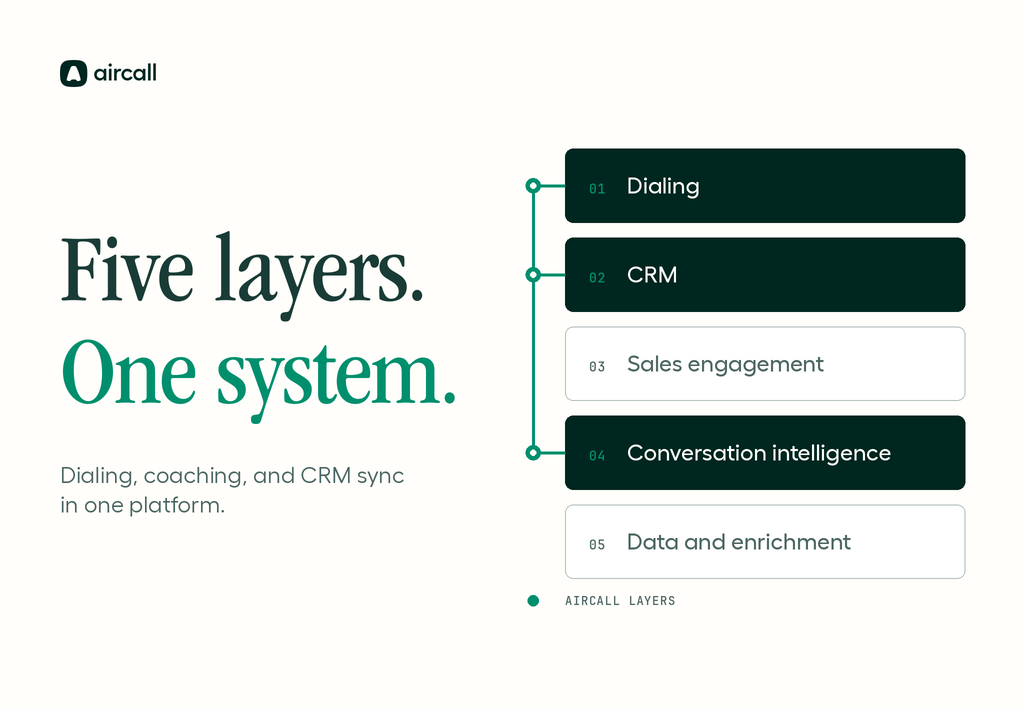
A complete outbound stack has five functional layers: dialing, CRM, sales engagement, conversation intelligence, and data enrichment, not five random purchases.
Aircall Power Dialer eliminates manual dialing so reps call 3x more leads per hour, dialing a list in sequence rather than in parallel.
CRM sync should be judged on depth, not existence. A stack where every layer writes back to the CRM automatically beats a stack where reps do it by hand.
84% of sales teams without an all-in-one platform plan to consolidate their technology, per Salesforce.
What we are
What is Aircall? | The intuitive, AI-powered platform bringing together intelligent voice agents, automated workflows, and adaptive real-time coaching at scale. |
|---|---|
What it does | Provides the dialing, coaching, and CRM sync layers of an outbound sales technology stack |
Who it's for | Sales leaders, SDR managers, and RevOps teams building or consolidating their outbound technology stack |
Why it's different | Combines dialing, live AI coaching, and native CRM sync in one platform instead of three separate vendor relationships |
Key concepts | Outbound sales tech stack, power dialer, sales engagement platform, conversation intelligence, RevOps |
The real cost of a stack nobody designed
Tool sprawl in outbound sales has a name, and increasingly, a price tag. Sellers use an average of eight tools to close deals, 42% of sales reps say they feel overwhelmed by the number of tools they are expected to use, and sellers who feel that way are 45% less likely to attain quota, according to Salesforce's most recent State of Sales research. That overwhelm is not just a morale problem. It shows up directly in quota attainment.
Gartner measured a different population and found a higher rate. Its September 2024 survey of 1,026 sellers found that 72% feel overwhelmed by the number of tools they are expected to use. Some of that cost is cognitive rather than financial.
Gloria Mark's research at UC Irvine found that interrupted work was resumed on average 23 minutes and 15 seconds later, and that people typically move through about two intervening tasks before returning to what they were originally doing. A rep switching between eight tools accumulates that cost many times a day.
None of this means fewer tools is automatically better. It means every tool in the stack needs to earn its place, and the layers need to talk to each other without a rep doing the translating.
The average seller works across eight sales tools.
42% of reps report feeling overwhelmed by their tech stack, per Salesforce.
72% of sellers told Gartner the same, in a September 2024 survey of 1,026 sellers.
Interrupted work is resumed on average 23 minutes and 15 seconds later, per Gloria Mark at UC Irvine.
The five layers of an outbound stack that actually holds together
Rather than a list of individual products, it's more useful to think in terms of functional layers. Each layer answers a different question about the outbound motion, and a healthy stack has exactly one strong answer for each, not three overlapping ones.
Layer | What it answers | Common category |
|---|---|---|
Dialing | How do reps actually reach people, fast? | Power dialer, click-to-dial |
CRM | Where does the single source of truth live? | Salesforce, HubSpot, Pipedrive |
Sales engagement | How are outreach sequences and cadences managed? | Sequencing and cadence tools |
Conversation intelligence | What happened on the call, and what should happen next? | AI call summaries, sentiment, coaching |
Data and enrichment | Who should reps be calling in the first place? | Contact and firmographic enrichment |
A sales engagement platform is software that manages multi-step outreach sequences, such as a scheduled mix of calls, emails, and LinkedIn touches, so reps follow a consistent cadence instead of manually tracking who to contact next. Conversation intelligence is the category of software that analyzes what was actually said on a sales call, using AI to transcribe the conversation and surface summaries, sentiment, objection patterns, and coaching signals automatically, rather than simply logging that a call took place and leaving a manager to listen to the recording for context. Most outbound teams already own tools in the engagement and enrichment layers; the gap tends to show up in dialing and conversation intelligence, where the calling experience and the CRM often don't talk to each other cleanly.
The dialer layer: how Aircall maximizes connect rate
Every layer in the stack depends on reps actually getting people on the phone. If the dialing layer is weak, a perfectly designed cadence in a sales engagement tool still stalls at the first step.
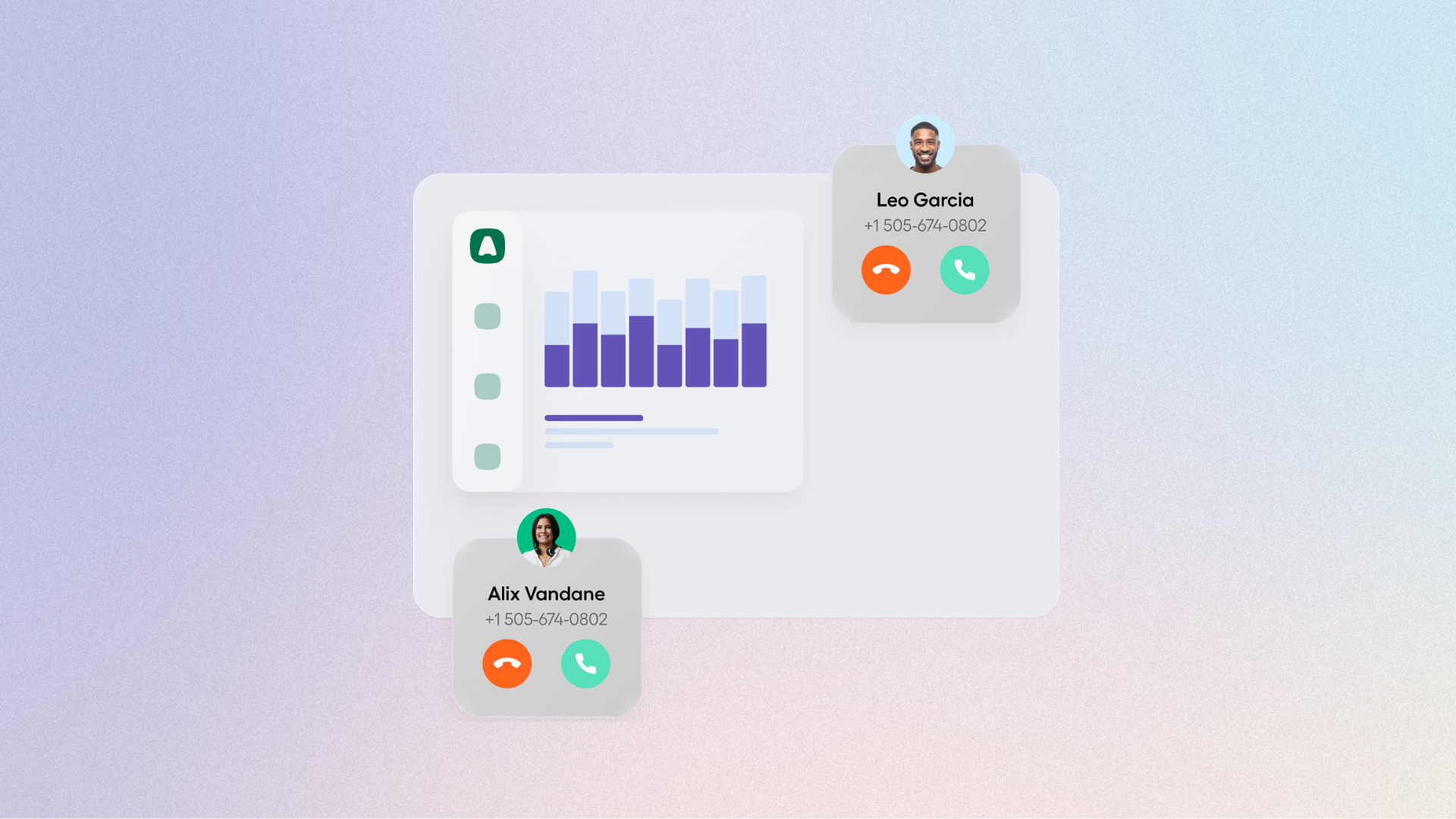
A power dialer is a phone system that automatically dials the next number on a rep's calling list the moment the previous call ends, removing the manual work of searching, dialing, and copy-pasting numbers one at a time. Aircall Power Dialer eliminates manual dialing so reps call 3x more leads per hour, automatically moving to the next number on the list the moment a call ends. Numbers detected on a prospect's website can be added to the calling queue directly, and CRM context appears on screen before the rep picks up, so the call starts with information instead of a blank contact card.
Frederik Schwerdtfeger, Business Development Manager at Zizoo, described the compounding effect this way: "If at the end of the day you save a couple of seconds per call, that's 10 minutes. All of a sudden you have another 2 to 3 hours by the end of the month. It really adds up." Read more about Power Dialer and how it fits into a broader outbound call center software setup.
Manually searching for and copying phone numbers
Dialing each number by hand between calls
Losing calling-list order or duplicating dials
Starting a call with no context on who's on the line
The AI coaching layer: turning live calls into ramp time
Conversation intelligence used to mean a recording a manager might review days later. In a 2026 stack, it means guidance that reaches the rep while the call is still happening.
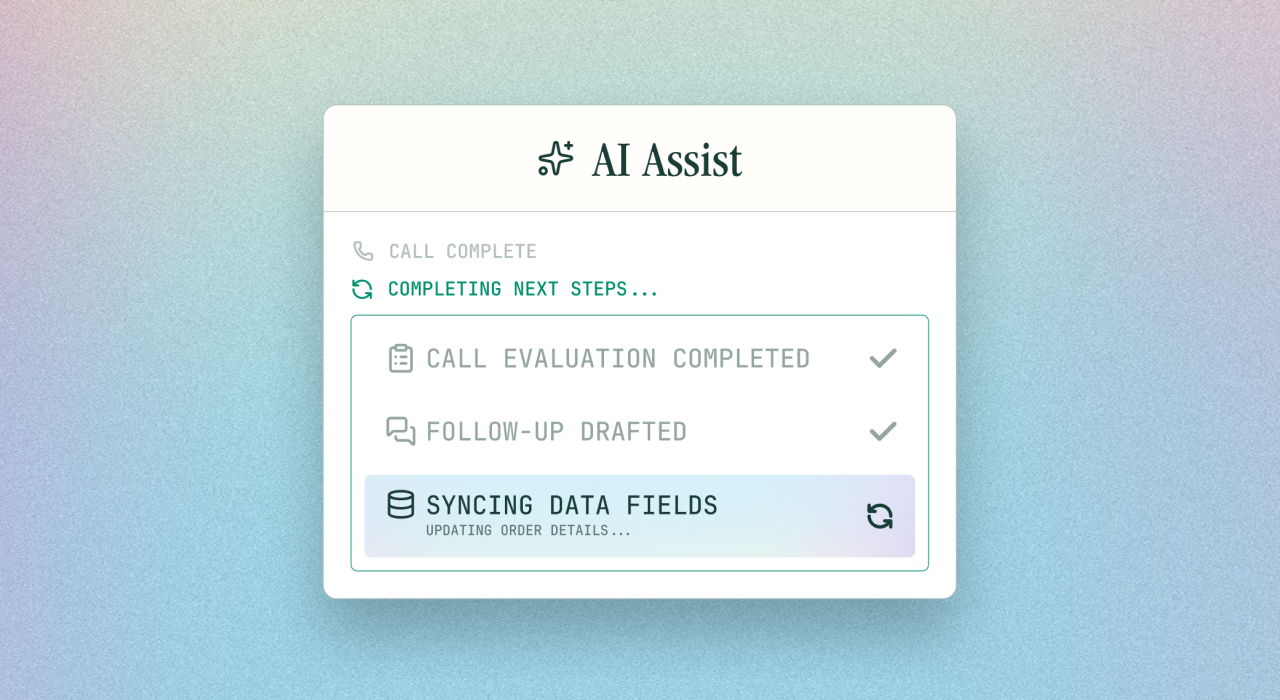
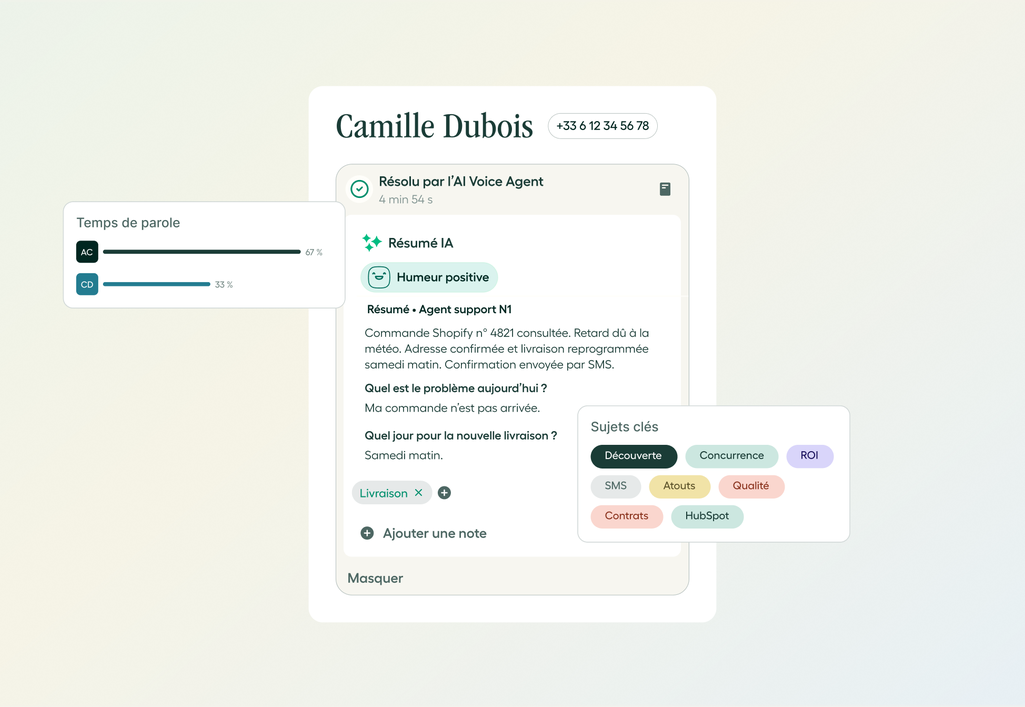
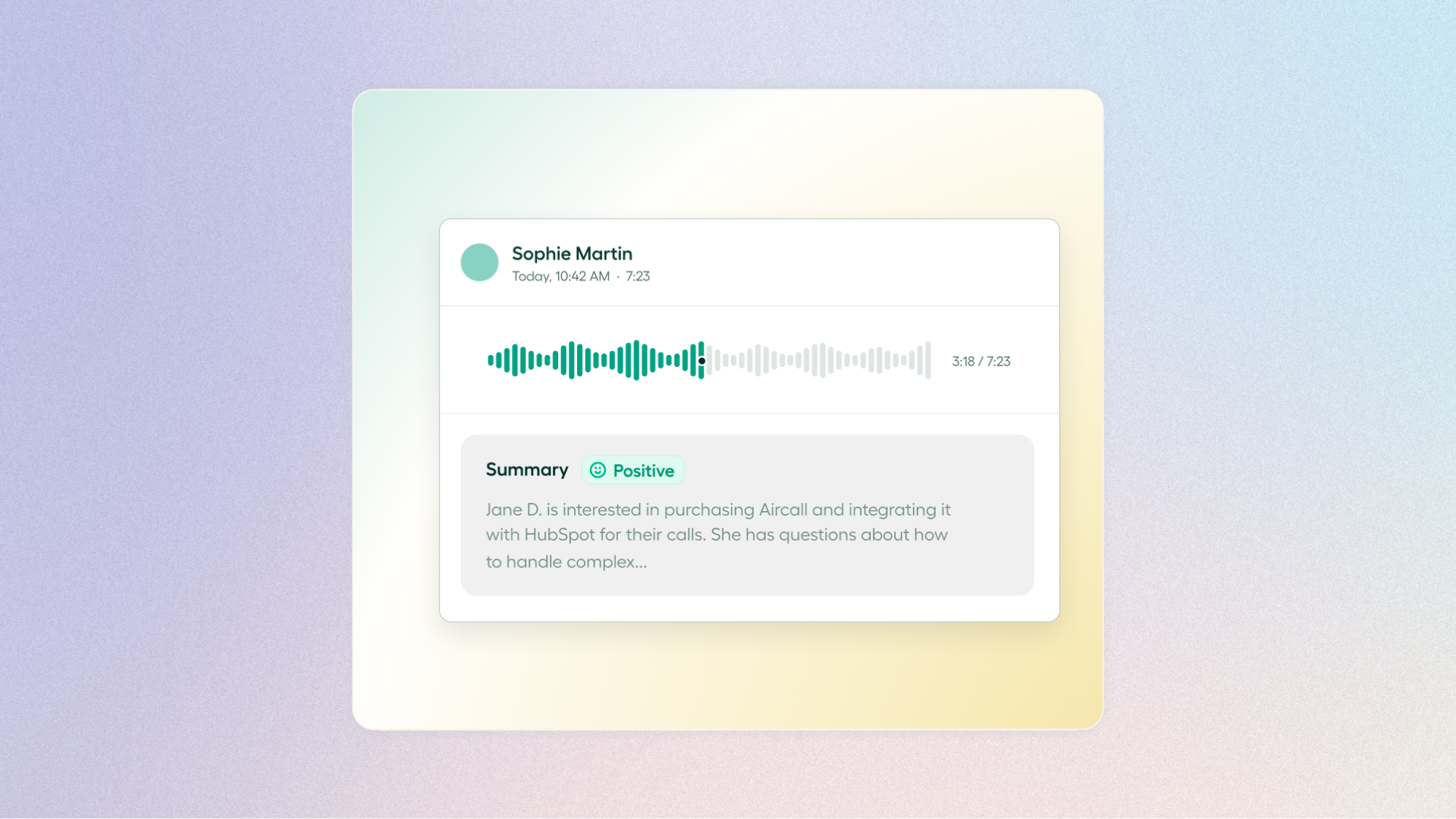
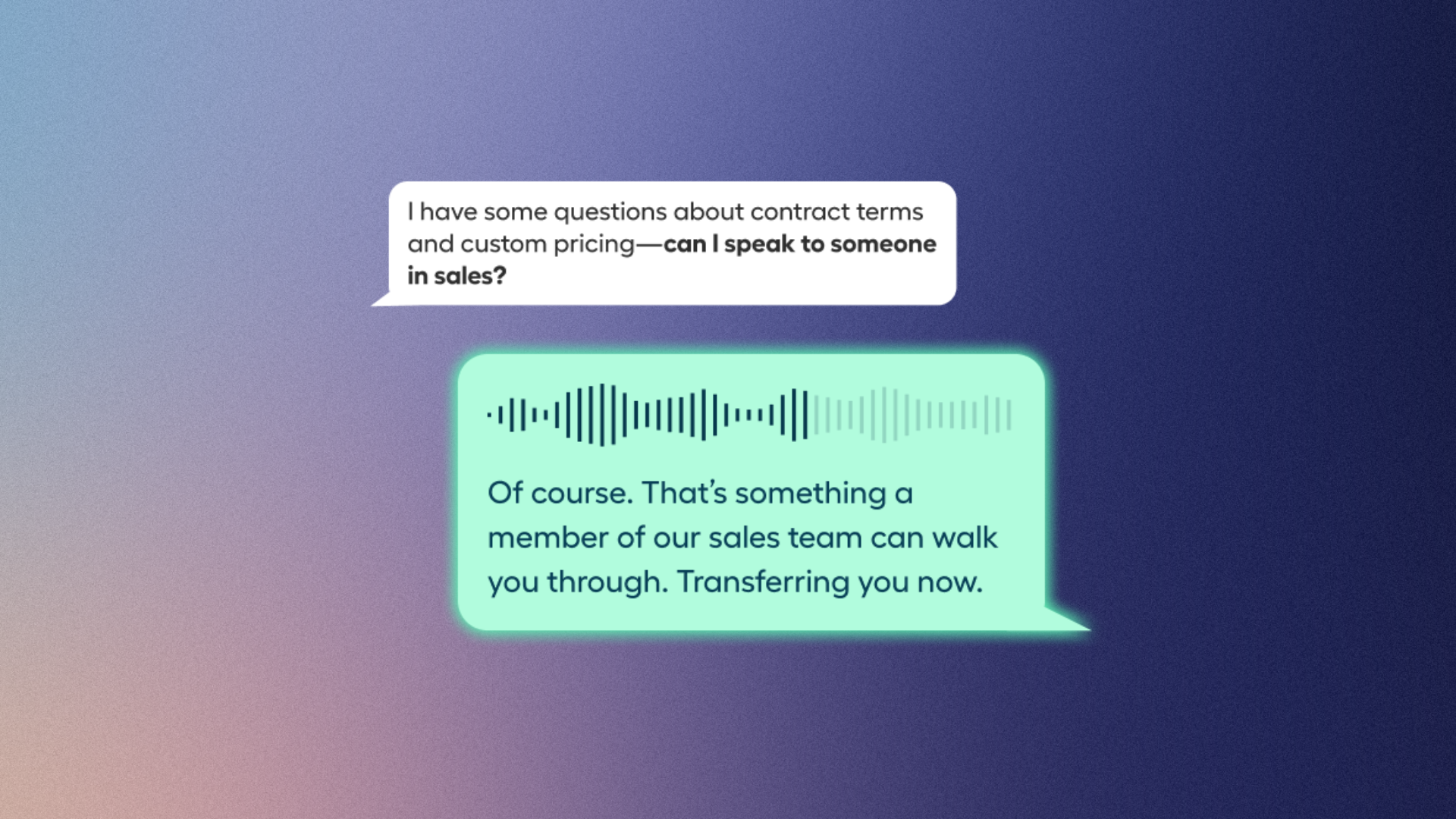
Aircall coaches sales reps in real time with AI guidance during live calls, surfacing objection-handling prompts and next-step suggestions at the moment they're needed rather than in a post-call debrief. This matters most for new reps: instead of learning entirely through trial and error or shadowing a senior rep, they get in-call support from their first week. AI Assist Pro extends this into automated scoring and trend analysis, so managers can see patterns across every call, not just the ones they happened to sit in on.
The coaching layer and the dialing layer need to be the same system, not two systems that occasionally sync. A power dialer that maximizes calls per hour is only as valuable as the quality of those calls, and that's the coaching layer's job.
Real-time AI coaching vs. post-call coaching
Dimension | Post-call coaching (traditional) | Real-time AI coaching |
|---|---|---|
When it helps | After the call, in a 1:1 or review session | During the live call, as it's happening |
New rep ramp-up | Relies on shadowing and manager availability | In-call prompts from the first week |
Manager coverage | Limited to calls a manager can review | Every call scored and flagged automatically |
Objection handling | Learned after losing the deal | Surfaced as the objection is raised |
Closing the loop: CRM sync and revenue intelligence
A stack with strong dialing and coaching layers still fails if the data from every call doesn't land back in the CRM automatically. Aircall embeds native CRM integrations that put calling, SMS, and AI summaries inside every major CRM, including a purpose-built Salesforce integration and HubSpot integration, so call outcomes, notes, and dispositions write themselves into the record instead of waiting on a rep's memory at the end of the day.
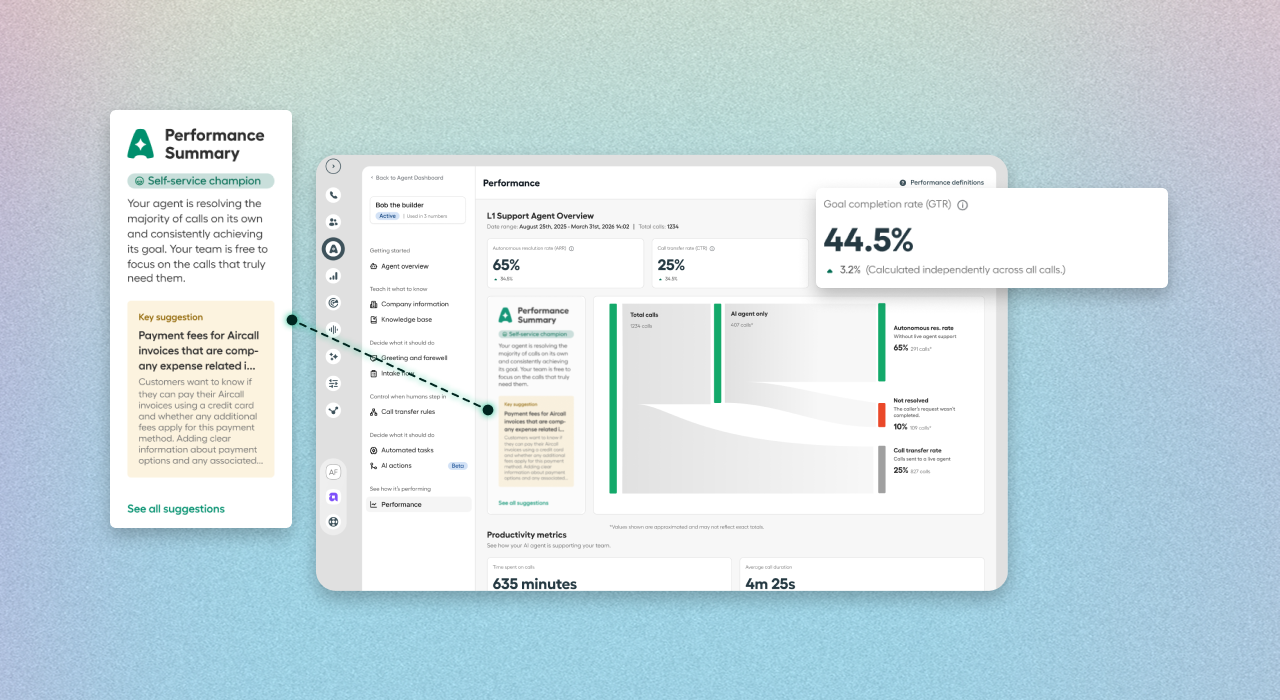
Aircall converts sales call data into actionable revenue intelligence through Aircall Analytics, tracking connect rates, talk time, and rep performance in one dashboard rather than a spreadsheet someone updates weekly. This is where RevOps earns its place in the stack. RevOps, short for revenue operations, is the function responsible for aligning sales, marketing, and customer success around a single revenue process, unifying the data, tooling, and reporting each team would otherwise manage separately so leadership works from one consistent view of pipeline and performance rather than three conflicting ones. RevOps gets the visibility it needs from a connected stack: not a report assembled after the fact, but a live view of what's working across the outbound motion. For a broader look at the category, see tools RevOps teams recommend for connecting the rest of the stack.
What should sync automatically after every call
Call outcome and disposition
AI-generated summary and sentiment
Next-step or follow-up task
Updated contact or deal record, with no manual entry
Sizing the stack to where your team actually is
Not every team needs every layer on day one. What changes by stage is which layer to fix first.
What to prioritize by stage
Under 10 reps: prioritize the dialing and CRM layers first. A single connected system beats five specialized tools that don't talk to each other yet.
10 to 50 reps: add the AI coaching layer. This is typically where ramp time and inconsistent objection handling start costing real pipeline.
50+ reps or a dedicated RevOps function: invest in the analytics and enrichment layers, since the volume of data finally justifies dedicated reporting and better targeting.
At any stage: audit before adding. If a tool's usage can't be tied to a specific layer from the table above, it's either redundant with something else in the stack or a candidate to remove.
Frequently asked questions
What tools make up a modern outbound sales tech stack?
A modern outbound stack has five layers: a dialer, a CRM, a sales engagement or cadence tool, conversation intelligence for coaching and analysis, and a data enrichment source for finding who to call.
Do I need a separate sales engagement platform if I already have a power dialer?
For the calling channel alone, often not. Aircall Power Dialer handles list-based sequential dialing, CRM context on screen, and automatic call logging without a sequencing tool on top. But a sales engagement platform also orchestrates email and LinkedIn steps in a single cadence. If your outbound motion depends on multi-channel sequences rather than call volume, you will still want one, and Aircall integrates with the major options rather than replacing them.
What's the difference between a power dialer and a predictive dialer?
A power dialer calls one number at a time from a list, connecting every call to a rep. A predictive dialer calls multiple numbers simultaneously and uses algorithms to predict answer rates, which can leave some answered calls without an available rep.
How does AI coaching fit into an outbound tech stack?
AI coaching sits inside the calling layer, giving reps real-time prompts during live calls rather than only reviewing performance afterward. Aircall coaches sales reps in real time with AI guidance during live calls as part of the same platform used for dialing.
Why does CRM integration depth matter for an outbound stack?
Shallow integrations log that a call happened. Deep integrations sync recordings, summaries, sentiment, and disposition into multiple CRM objects automatically, keeping the CRM accurate without manual rep entry.
How many tools should an outbound sales team actually use?
There's no universal number: it depends on team size and deal complexity. The better test is whether each tool maps to a distinct layer, dialing, CRM, engagement, intelligence, or enrichment, rather than duplicating one another.
A stack that adds up, instead of adding friction
The teams getting outbound right in 2026 aren't the ones with the most tools. They're the ones where the dialing, coaching, and CRM layers behave like a single system, so a rep's day is spent in conversations instead of stitching data between tabs.
Before adding the next tool to the stack, it's worth asking which layer it's actually filling, and whether an existing layer could already do the job if it were more deeply connected.
Aircall provides the dialing, coaching, and CRM sync layers of an outbound sales technology stack, so the calling layer reports into the same system as everything else rather than sitting beside it.
Published on September 23, 2026.