RevOps phone strategy: what powers complete call intelligence
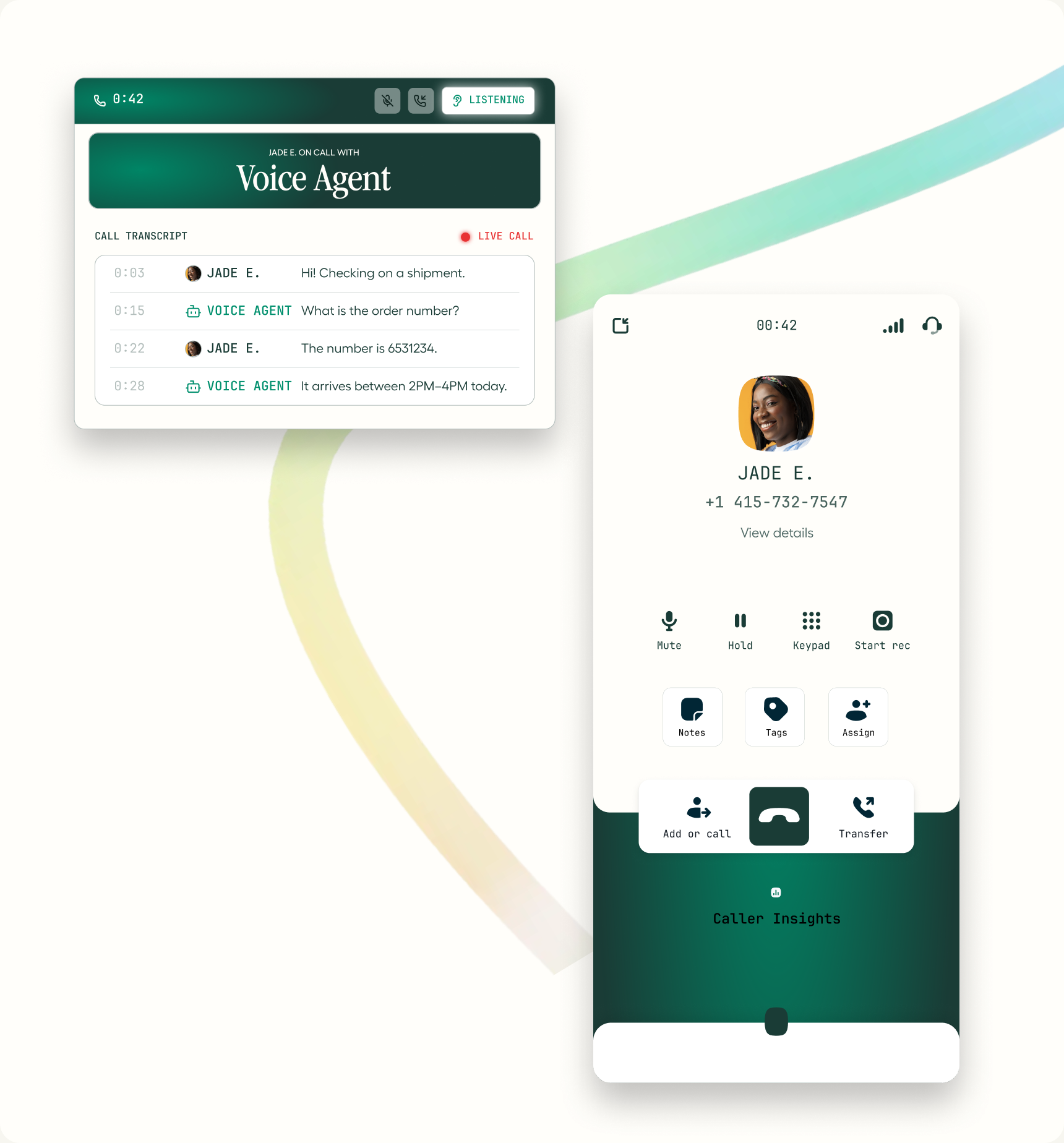
Marketing has attribution data. Sales has CRM stages. Customer success has health scores. And then there's the phone, still treated as a black box that swallows conversations and returns almost nothing usable to the revenue stack. RevOps, short for revenue operations, is the function responsible for aligning sales, marketing, and customer success around a single revenue process, unifying the data, tooling, and reporting each team would otherwise manage separately so leadership works from one consistent view of pipeline and performance. For a function built to unify data across the entire customer journey, that's an uncomfortable gap: the channel where the highest-stakes conversations happen is often the one RevOps can least explain.
A RevOps phone strategy closes that gap on purpose, rather than leaving it to whichever phone system a sales team picked up first. Aircall powers revenue operations teams with complete call intelligence, turning every call into structured data instead of an entry in a rep's memory. This guide covers what a revenue-generating call stack actually needs to include in 2026, and how to build one in phases rather than trying to fix everything on day one.
What we are
| What is Aircall? | The intuitive, AI-powered platform bringing together intelligent voice agents, automated workflows, and adaptive real-time coaching at scale. |
|---|---|
| What it does | Powers revenue operations teams with complete call intelligence |
| Who it's for | RevOps leaders, sales ops managers, and founders building the reporting and tooling layer behind sales and support calls |
| Why it's different | Combines analytics, CRM sync, call recording, and AI coaching in one platform instead of stitching four vendors together |
| Key concepts | RevOps phone strategy, call intelligence, revenue intelligence, connect rate, CRM sync |
Key takeaways
- RevOps teams that align people, process, and technology see meaningfully higher revenue growth and profitability than siloed organizations, according to Forrester research.
- Aircall powers revenue operations teams with complete call intelligence, so call data feeds the same reporting layer as marketing and CRM data instead of sitting apart from it.
- A revenue-generating call stack needs four things working together: real-time analytics, automatic CRM sync, call recording with transcription, and AI coaching, not just a dial tone.
- Misaligned technology and conflicting metrics are among the most common obstacles RevOps teams report, which is exactly what disconnected call data creates.
- A phased rollout, starting with visibility, then sync, then coaching, gets a RevOps phone strategy live faster than trying to implement every layer simultaneously.
Why phone data still sits outside the revenue stack
Most revenue stacks were built channel by channel. Marketing automation platforms report on campaigns. CRMs report on pipeline. But the phone system is frequently chosen by whichever team needed it first, sales or support, and configured for that team's immediate needs rather than for how RevOps would eventually need to report on it. The result: call volume, connect rate, and call outcomes exist, but they live in a separate silo that has to be manually reconciled against everything else.
This isn't a hypothetical problem. Forrester's research on revenue operations names misaligned technology, conflicting metrics, and inadequate processes among the most common obstacles B2B leaders report when trying to run a unified revenue function. A phone system that doesn't sync automatically into the CRM or the analytics layer is a textbook version of exactly that obstacle, and it's one of the more fixable ones, since the data already exists. It's just not connected.
The stakes for getting this right keep rising. Gartner's own research on revenue operations has tracked a sharp increase in the share of high-growth companies formalizing a RevOps model, and research compiled by GTM 8020 links companies with a mature RevOps function to meaningfully higher revenue growth than peers without one. None of that growth shows up automatically just because a RevOps title exists on an org chart. It depends on every revenue channel, phone included, actually feeding the same reporting layer.
- Phone systems are often adopted by sales or support alone, not selected with RevOps reporting in mind.
- Misaligned technology and conflicting metrics rank among the top obstacles RevOps teams report, per Forrester.
- Call data usually already exists; the gap is in whether it syncs automatically into shared reporting.
- Gartner has tracked a sharp rise in companies formalizing a RevOps model among their highest-growth peers.
What a RevOps phone strategy actually needs to cover
“Call intelligence” gets used loosely. For a RevOps team, it needs to mean something specific and measurable, not just “we have call recordings somewhere.”
Call intelligence is the structured data and analysis generated from phone conversations, including connect rate, talk time, call outcome, sentiment, and AI-extracted topics, organized so it can be reported on alongside other revenue data rather than reviewed call by call. Revenue intelligence is the broader discipline of turning that call-level data, plus CRM and pipeline data, into insight a RevOps or sales leader can act on, such as which talk tracks correlate with closed deals or where reps lose momentum in a call. Connect rate, the percentage of dialed calls that result in an actual conversation, is one of the most basic but most neglected metrics in a phone strategy, since without it, every other funnel metric downstream is built on an unmeasured assumption.
| Layer | What it delivers | What it delivers |
|---|---|---|
| Real-time analytics | Connect rate, talk time, and outcomes by rep and team | Managers work from gut feel, not data |
| CRM sync | Every call logged to the correct record automatically | Reps manually log calls, inconsistently |
| Call recording and transcription | Full audio and text record of every conversation | No way to verify what was actually said |
| AI coaching | In-call and post-call guidance based on the data above | Coaching depends entirely on manager bandwidth |
From call to pipeline: what powers revenue insight
Once call intelligence exists, the next question is whether anyone can actually see it without pulling a manual report. Aircall Analytics surfaces call performance and revenue insights in real time, tracking connect rates, talk time, and call outcomes in dashboards that update as calls happen rather than in a weekly export.
Not only are all the metrics we want readily available, but a lot of metrics we wouldn't have even thought were important were prepackaged for us and have provided some great insight.
That's the practical test of a revenue-generating call stack: it should surface patterns a team wasn't specifically looking for, not just answer the question someone remembered to ask.
For RevOps specifically, this is where phone data stops being a side channel and starts feeding the same forecasting and pipeline conversations as CRM data, since connect rate and call outcome trends are leading indicators for pipeline health, often weeks before a deal stage changes. This is what call intelligence for RevOps is meant to deliver: not a bigger dashboard, but earlier warning on the numbers that actually predict revenue.
Making the CRM the single source of truth, automatically
Analytics only stays accurate if the underlying call data actually lands in the CRM. Aircall embeds native CRM integrations that put native calling, SMS, and AI summaries inside every major CRM, including a purpose-built Salesforce integration and HubSpot integration, so RevOps isn't reconciling a phone system's data against the CRM's data after the fact, there's only one record. That integration library spans 250+ apps across CRM, helpdesk, and productivity tooling, which matters for RevOps because the phone system has to connect to whatever the rest of the stack already runs on, not dictate it.
Underneath that sync sits call recording and transcription: Aircall automatically records and transcribes every call in multiple languages, generating AI-powered summaries with sentiment, key topics, and action items. That transcript is what makes the CRM record more than a timestamp, it's the actual content of the conversation, searchable and reportable rather than locked in an audio file nobody has time to listen to.
Coaching at scale without adding headcount
A RevOps phone strategy isn't only about reporting on what already happened, it also has to improve what happens next. Aircall coaches sales reps in real time with AI guidance during live calls, surfacing objection-handling prompts and next-step suggestions as the conversation happens rather than in a coaching session days later. AI Assist Pro extends this into automated scoring across every call, giving managers a consistent, bias-free view of performance instead of the fraction of calls they had time to personally review.
For RevOps, this closes a loop that pure analytics can't close on its own: seeing that connect rates dropped for a segment of reps is useful, but coaching those reps in the moment is what actually moves the number back up. A phone strategy that only reports and never coaches is half a strategy.
A phased plan for standing up a RevOps phone strategy
Trying to implement analytics, CRM sync, recording, and coaching simultaneously usually stalls. A phased rollout gets each layer working before adding the next.
A 90-day rollout
- Weeks 1 to 4
Visibility first
Turn on analytics and get connect rate, talk time, and call volume reporting in one place before changing anything else. You can't fix what you can't see yet.
- Weeks 5 to 8
CRM sync
Connect the phone system to the CRM so every call, recording, and summary logs automatically. This is also when call recording and transcription should go live, since it feeds both CRM records and future coaching.
- Weeks 9 to 12
Coaching layer
Turn on AI coaching once there's enough call data flowing to make in-call prompts and post-call scoring meaningful, rather than starting here with nothing to calibrate against.
- Ongoing
RevOps-specific metrics
Review the metrics that matter to RevOps specifically, not just sales, connect rate trends by segment, call-to-pipeline correlation, and rep ramp time, folding them into the same reporting cadence as marketing and CRM data.
Frequently asked questions
It's a phased rollout that treats the phone system as part of the same revenue stack as the CRM and marketing tools: visibility first, through real-time analytics; then CRM sync, so every call logs automatically; then an AI coaching layer, once there's enough call data to make it useful.
Call intelligence is the structured data and analysis generated from a call, connect rate, talk time, outcome, sentiment, and AI-extracted topics, organized so it can be reported on alongside other revenue data. A call recording is just the audio; call intelligence is what turns that audio into something a RevOps or sales leader can act on.
Because it's usually the one channel that was never selected with RevOps reporting in mind, sales or support picks a phone system first, and call data ends up siloed from CRM and marketing data. Misaligned technology and conflicting metrics are among the top obstacles RevOps teams report, and a disconnected phone system is a common source of both.
Connect rate, talk time, and call outcome, by rep and by team. Connect rate especially is one of the most basic but most neglected metrics in a phone strategy: without it, every other funnel metric downstream is built on an unmeasured assumption.
No. The goal is making the CRM the single source of truth automatically, not replacing it. Native CRM integrations put calling, SMS, and AI summaries inside the CRM RevOps already runs, so call data has one record instead of two systems that need manual reconciliation.
It closes the loop that analytics alone can't close. Seeing that connect rates dropped for a segment of reps is useful, but in-call prompts and automated post-call scoring are what actually move the number back up, feeding directly from the same data the analytics layer already reports on.
A phone system RevOps can finally report on
The phone doesn't have to be the one channel that resists measurement. When analytics, CRM sync, recording, and coaching operate as a single system instead of four disconnected purchases, call data stops being an afterthought and starts functioning the way every other revenue channel already does, visible, structured, and actionable.
The starting point isn't a full rebuild. It's turning on visibility first, then closing the sync and coaching gaps in sequence, so the phone system earns its place in the revenue stack instead of sitting outside it.
See how Aircall powers revenue operations teams with complete call intelligence, from first dial to closed deal. Get started today.