

Ready to build better conversations?
Simple to set up. Easy to use. Powerful integrations.
Get free accessReady to build better conversations?
Simple to set up. Easy to use. Powerful integrations.
Get free accessAircall AI is the most integrated AI platform, and it’s now something you can build on. Our Developer Portal gives engineering teams a public, documented path to turn conversations into structured data and to let AI agents take real actions in your systems during a live call or message.
Tl;dr
Three capabilities are open through the Aircall Developer Portal: AI Assist for conversation intelligence, AI Voice Agents, and AI Messaging Agents across SMS and WhatsApp. You can read structured intelligence out of every conversation, trigger agents from your own workflows, and expose your system's actions to those agents over MCP. Connect a tool once, and every product in the Aircall AI suite can use it. Building on Aircall used to mean reading reference docs and reverse-engineering the build process, and most teams stalled before they shipped. The rebuilt portal documents the full path from design to publish for the first time.
AI Assist: every conversation becomes structured data
AI Assist turns every call and message into machine-readable intelligence: transcripts, summaries, sentiment, action items, QA results, and playbook outcomes. It’s available through REST APIs and webhooks, so you can pull or receive it wherever you need it.
The pattern is straightforward:
Subscribe to a webhook, and the moment a conversation ends you receive a structured payload.
No polling, no scraping recordings, no manual tagging.
From there, it’s your logic:
Write the summary back to a CRM record
Route a negative-sentiment call to a managerPopulate a coaching dashboard
Feed action items into a ticketing queue.
AI Assist also pulls context from your connected tools to surface conversation history to your reps, then logs the conversation back into your CRM, data warehouse, or QA stack.
This is the layer that makes products smarter with every conversation. CRMs, helpdesks, QA tools, and coaching platforms can all consume the same intelligence and improve the more their users talk to customers.
Agents that act, not just answer
AI Assist tells you what happened. AI Voice and Messaging Agents do something about it while it’s still happening.
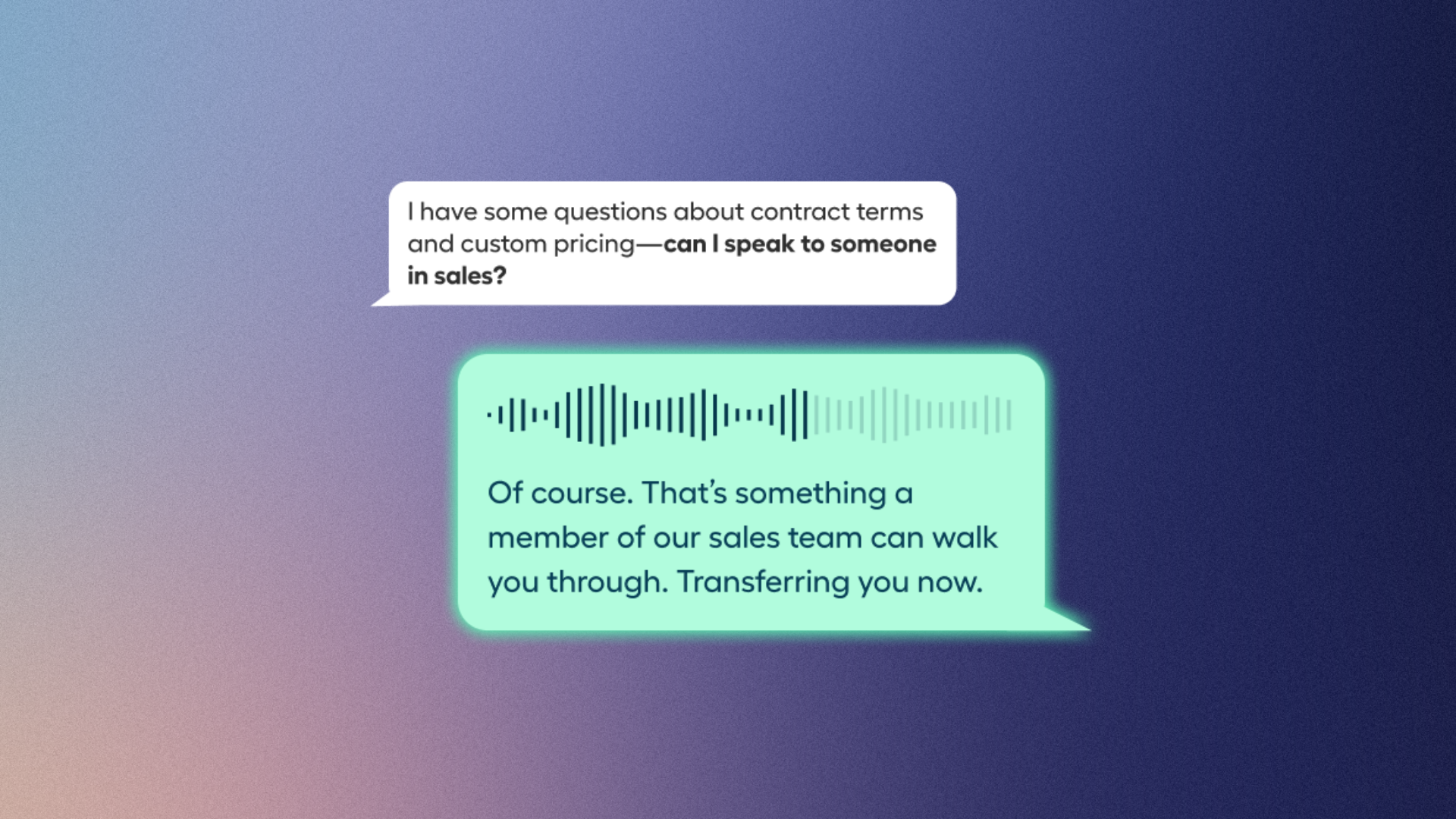
AI Voice Agents run calls end to end, follow the workflows you define, hold a natural conversation, and connect to external systems to take action. Inbound AI Voice Agent calls can be handled entirely inside Aircall, and outbound AI calls can be triggered from any product you build. AI Messaging Agents apply the same agent model to messaging across SMS and WhatsApp, on the same ecosystem and the same integrations, so there are no silos between channels.
The point of an agent has become resolution, not deflection. A conversation is only resolved when the agent can look up an order, qualify a lead, open a ticket, or book a meeting in real time. That requires your systems to be reachable mid-conversation, which is where MCP and AI Actions come in.
MCP and AI Actions: one light build, multiple possibilities
AI Actions is how Aircall's agents connect to and act within external tools. MCP, the Model Context Protocol, is how you make your system's capabilities available to those agents. Instead of building bespoke integration logic for each workflow, you describe your tools and let the agent decide when to call them.
The build is intentionally light:
Stand up an MCP server that exposes your actions as tools.
Write clear schemas and tool descriptions. The agent reasons over these to decide what to call and when.
Register your MCP URL through the Technology Partner Program.
That is the integration. Aircall's agents discover your tools automatically and invoke them during conversations. One MCP server works across AI Agents and AI Assist automatically, not just in one product. Because MCP is becoming the standard for AI agent interoperability, the same server also works with every other MCP-speaking platform your customers use. It takes one investment and one build for a broad payoff.
MCP integrations are declarative, which lowers maintenance. When a workflow changes, you update your schema and descriptions rather than rewriting integration code. There is no brittle glue to keep in sync every time the conversation logic shifts.
The most integrated, end-to-end AI platform
When an Aircall agent reads and acts across several systems at once, it does a job rather than just answering a question. A retail Order Concierge can pull order details from Shopify, process a refund through Stripe, and log the outcome in the CRM inside one call. A Lead Qualifier can answer inbound, enrich HubSpot, and book a meeting in Calendly before the caller hangs up. The more systems you connect in a single workflow, the more the agent can resolve without a handoff.
A documented path from idea to marketplace
The rebuilt Developer Portal documents the entire path, from design to build to test to publish, across three tracks: AI integrations covering AI Assist, AI Voice and Messaging Agents, and MCP; classic REST integrations using the existing REST APIs and webhooks, now documented end to end; and embedded experiences that surface your product inside the Aircall workspace. Whichever track you pick, you get a defined route to a live, listed integration, plus marketplace visibility, co-marketing, and tier benefits across Aircall's 400+ integration base and 23,000 customers. Partners integrating now are visible to Aircall's customers from day one, while the ecosystem is still small enough to stand out in.
This isn’t a beta running on synthetic traffic. Our own Product Support team deployed AI Voice Agents on inbound calls before the platform opened to partners, and the agent exceeded its deflection target within the first week, with customer experience scores rising measurably over the weeks that followed. The capabilities you build on are the same ones already resolving live conversations.
Where to start
If you want intelligence out of conversations, start with AI Assist. Subscribe to a webhook and you’ll have structured data flowing in minutes. If you want your product to act inside conversations, stand up an MCP server and register the URL. If you need classic call and contact sync, the REST APIs are documented end-to-end for the first time.
Voice and messaging are becoming programmable in a way they never were before. The conversation is no longer a black box that ends in a recording. It’s a stream of structured events and a surface your code can act on in real time.
Head to the Aircall Developer Portal to read the docs, explore the AI Assist and MCP reference examples, and ship your first AI-ready integration.
Published on September 3, 2026.
